Work · game · October 2026
Ictineu
A strategy game about keeping a sealed undersea city alive
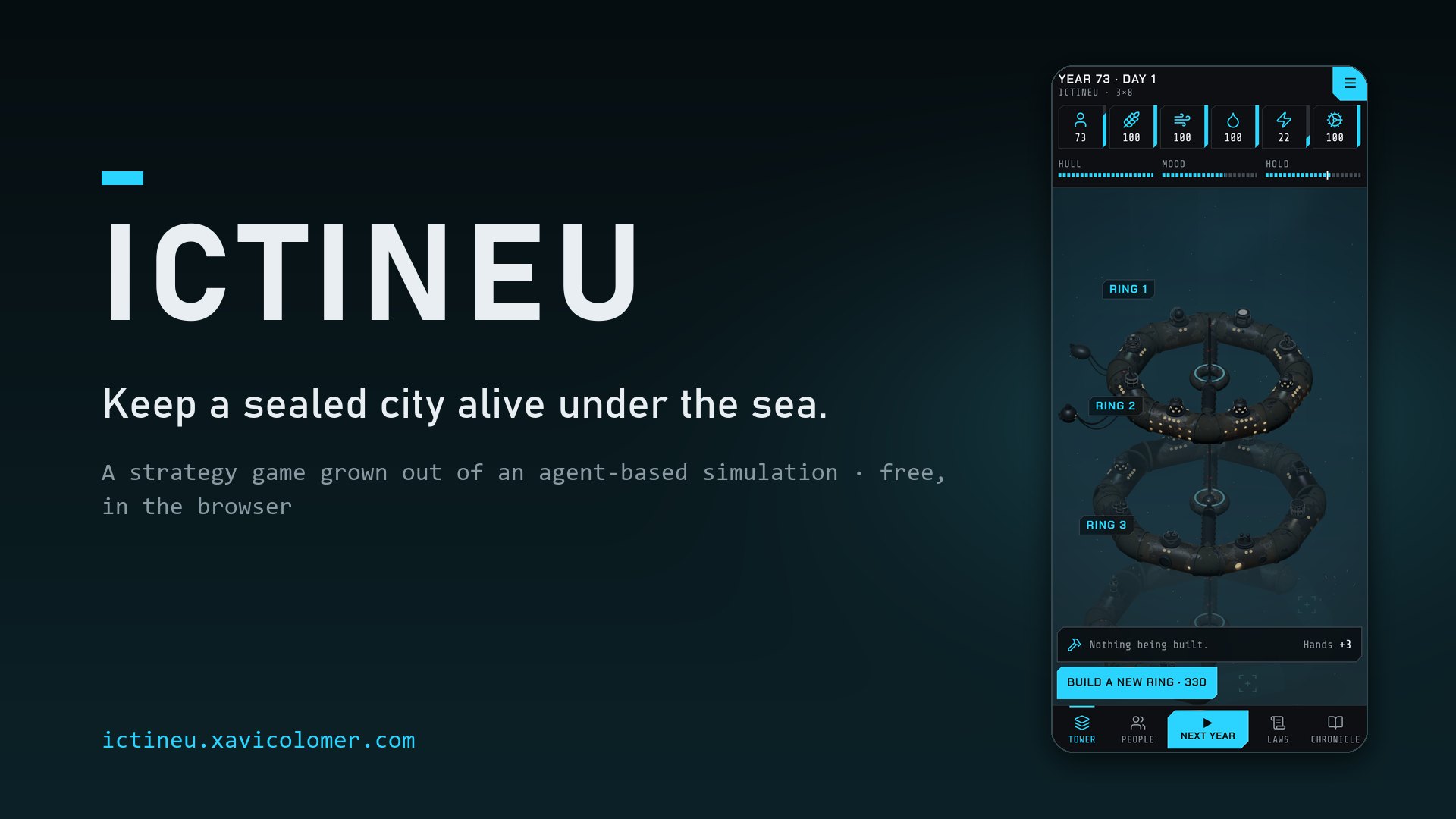
Ictineu is a strategy game about a city sealed at the bottom of the Mediterranean. You design the founding ring in a shipyard, choose how many people go down, and then keep them alive: air, water, food, power, spare parts, and the people who run all of it and sometimes stop.
It grew out of Tales from the Deep, an agent-based simulation of a sealed city I have been building for a novel. The game keeps the simulation's one rule: nothing is scripted. Every shortage, strike or broken shaft comes out of the state of the city, never out of a table of random events.
What it does
A vessel you build and staff. Capsules join into rings, rings hang from a central shaft, and you can only build what people can staff. A new capsule goes against a corridor or against one that already stands, so the hull grows outwards from where people can walk in.
Rings with their own economy. Until a ring is connected to the shaft it lives on its own stores and hands. Collars and shaft segments wear and can break, and a ring cut off has to get by alone until the crew mends it.
Decisions with a price. When something goes wrong the game does not hand you the answer. It offers two or three ways out and plays each one 30 days ahead on a copy of the city, so you see what each costs before you choose. Most trouble the city now sorts out by itself; the notices that still stop the year are the ones worth stopping for.
Moving house takes time. People move between rings in the lift, one household at a time. Emptying a ring whose collar is failing, or settling a new one, is something you plan ahead.
A living 3D scene. A weathered submarine hull in three.js: round windows lit warm with people at the glass, a bathysphere lift, fish, small vessels moored to the hull with their position lights, and music and sound generated live with the Web Audio API. There is no build step: the game is plain ES modules, mobile first, in Spanish and English.
Testing it with machine learning
To find out whether it is a good game, I let machine learning play it. Evolution strategies train a parametric player on panels of cities and compare it with a random player and with my own hand-written one over 200 years. The first study showed that skill matters (a random player never reached year 100), but also that the safest strategy was to stay small and that most political choices made no difference. Both findings went straight back into the design.
Under the hood
A deterministic, seeded engine: a city replays exactly, and a forecast is the real rules played forward rather than a guess. Saves follow the player to any phone with Google sign-in, through a small AWS API (Lambda, API Gateway and DynamoDB behind CloudFront), and two phones that played apart are asked which game to keep instead of silently overwriting each other.
Gallery
-
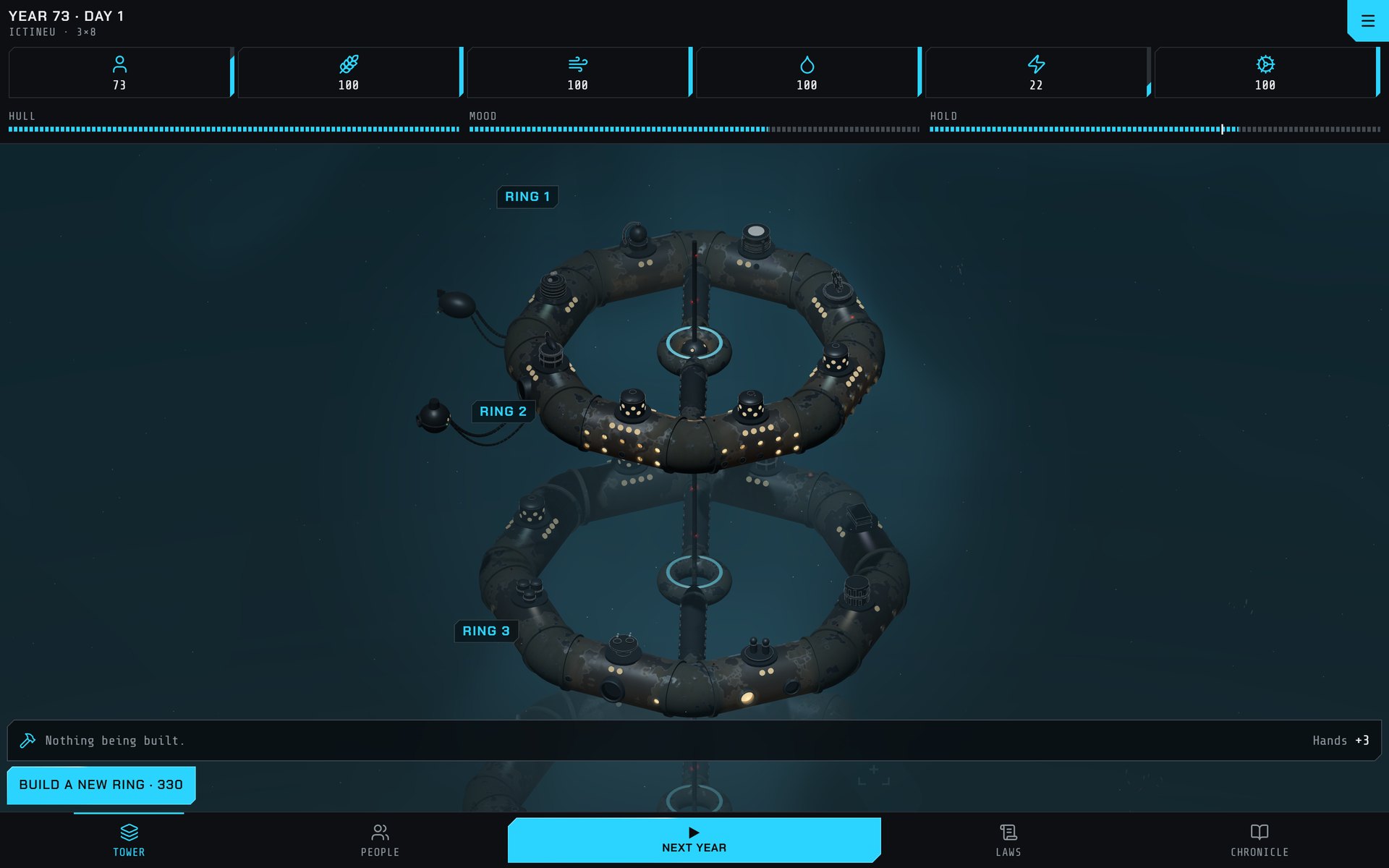
Year 73: three rings on the shaft, two vessels tied to the hull, the lift's guide lit along its length -
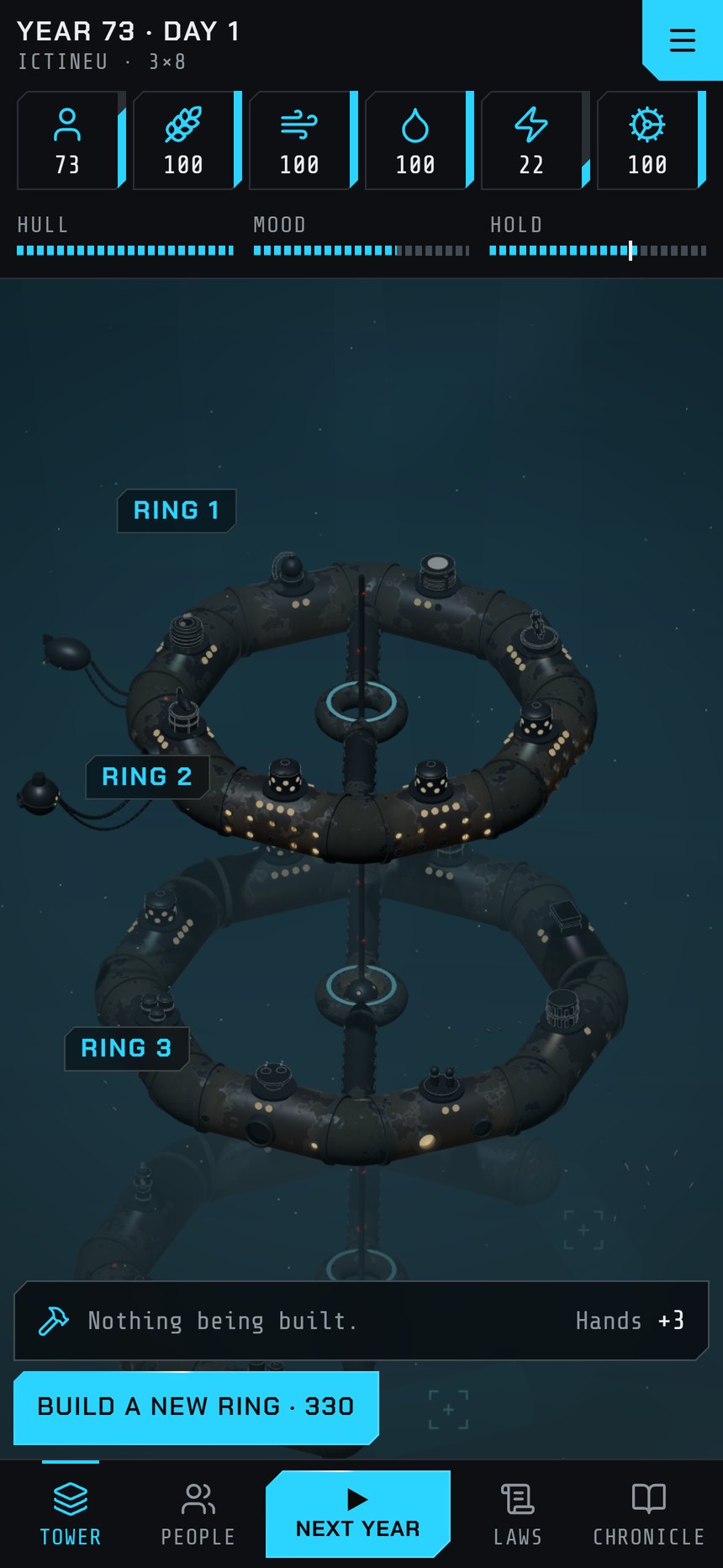
Mobile first: the whole city on one screen, the year turned with one button -
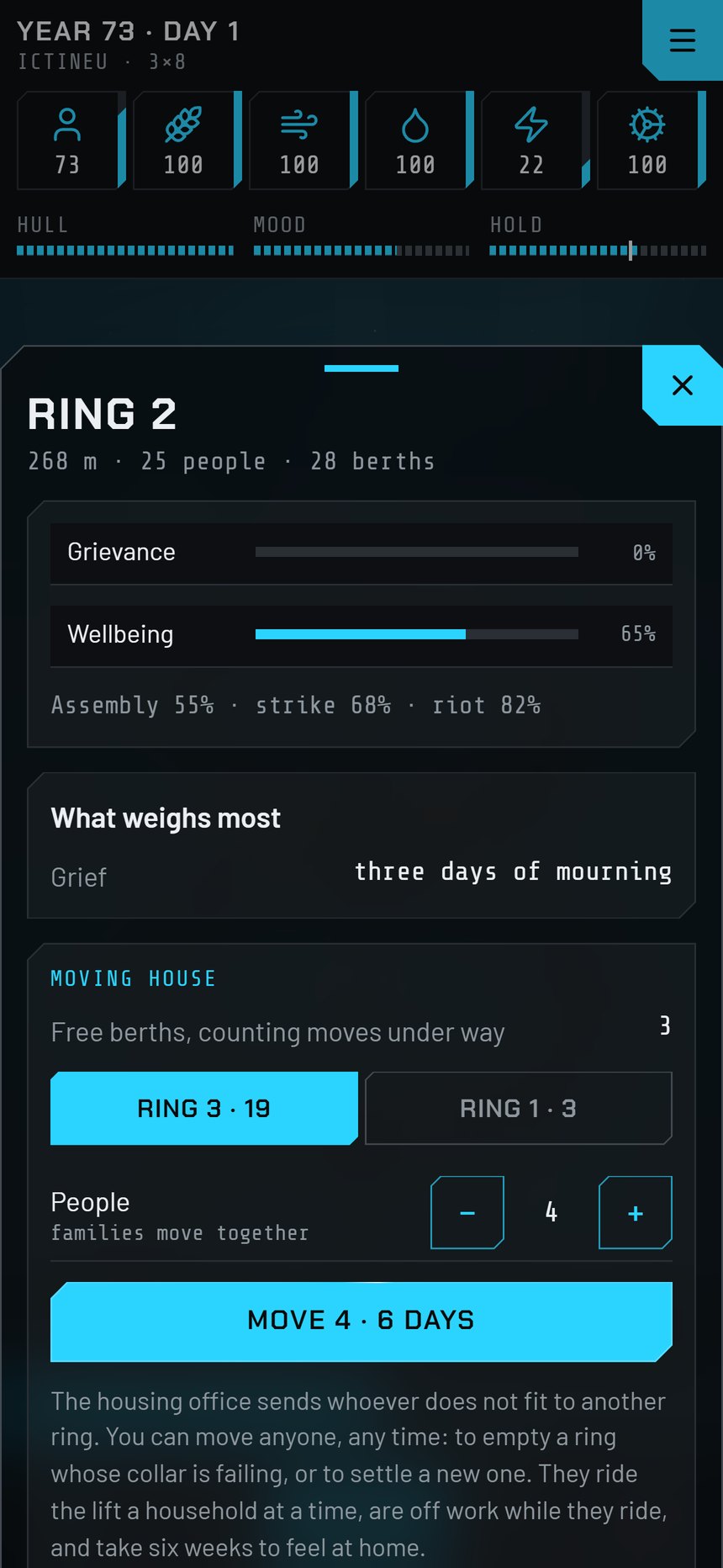
Moving house takes the lift, one household at a time -
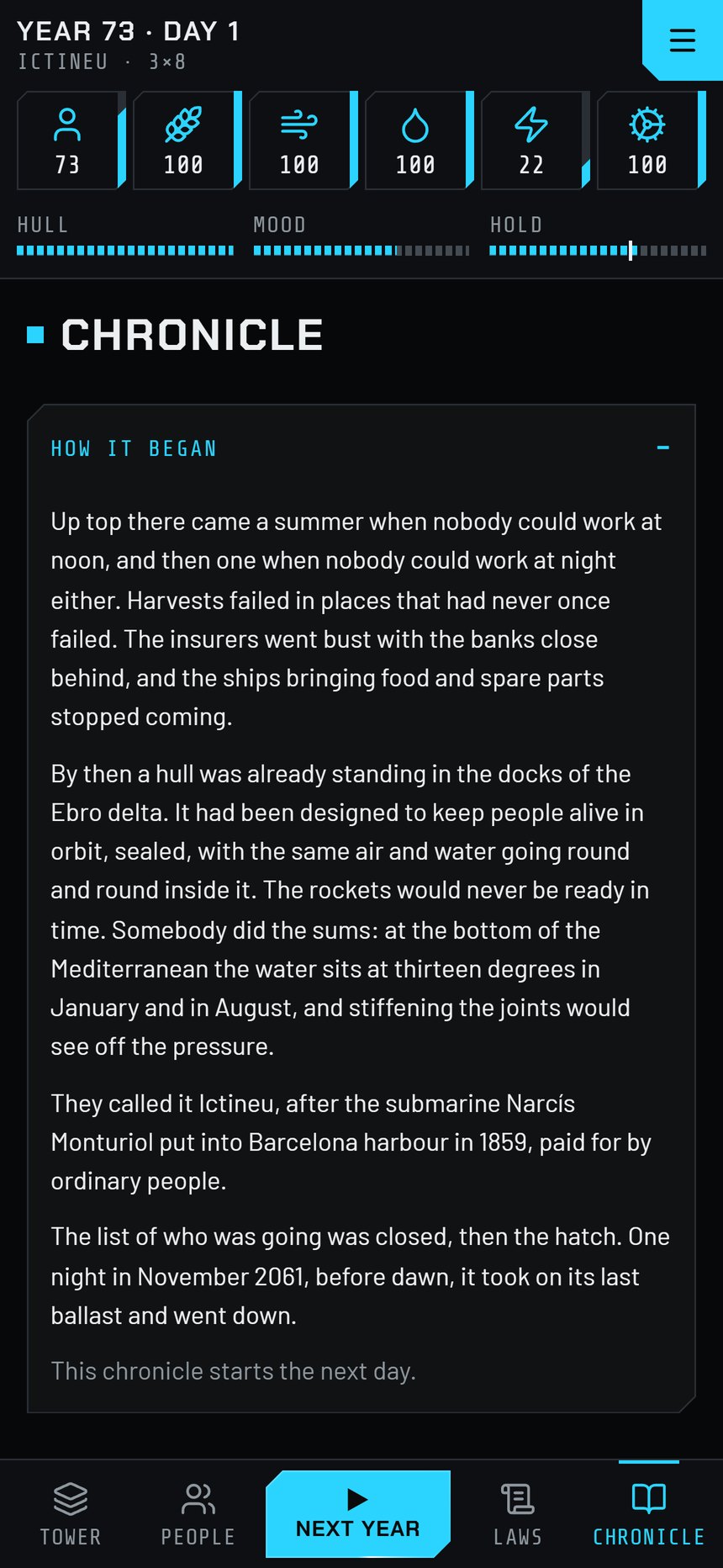
The chronicle opens with the founders' own account of how it began
Next
-

Theta Infinity Studio
web3 · 2021A fully decentralized media CMS and interactive player for the Theta Network